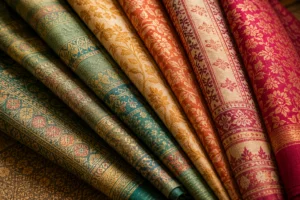
Tangail sarees are far more than just beautiful fabrics – they embody centuries of Bangladeshi tradition. These handwoven textiles, made of cotton, silk or jute, are distinguished by their fine texture, detailed designs and vibrant local pattern .
For generations, Tangail weavers (from the Basak and Jhola communities) have crafted each saree as a work of art reflecting village life, social traditions and festive prideich.unesco. orgwtop.com. Worn during major celebrations and weddings across Bangladesh and neighboring regions, the Tangail saree is truly a cultural symbol – so significant that in 2025 UNESCO inscribed its weaving tradition on the Intangible Cultural Heritage Listm.thewire.in. (On December 9, 2025, the world formally recognized Tangail’s handloom craft as “intangible heritage of humanity”)
The lore of Tangail is woven into every thread. Here, sarees were historically woven by Hindu (Basak) and Muslim (Jhola) families alike, using techniques passed down through generations ich.unesco.org . Each piece begins with vivid dyed yarns, and on the loom artisans choreograph intricate jaal (lattice) patterns and floral motifs by hand.
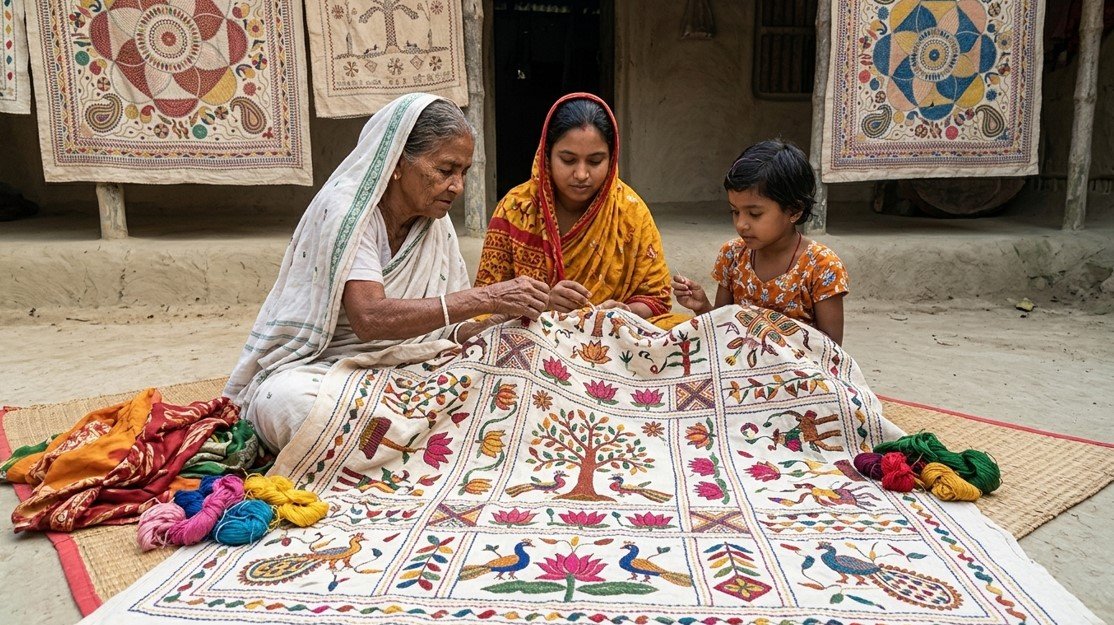
Traditionally, men do the weaving and dyeing, while women spin the yarn and apply starching and finishing. This collaboration – the rhythmic click-clack of pit looms and the gentle hum of spinning wheels – creates textiles that local families still celebrate before festivals and ceremonies. Every Tangail saree carries a story: of community, identity and the pride of keeping a two-century-old craft alive.
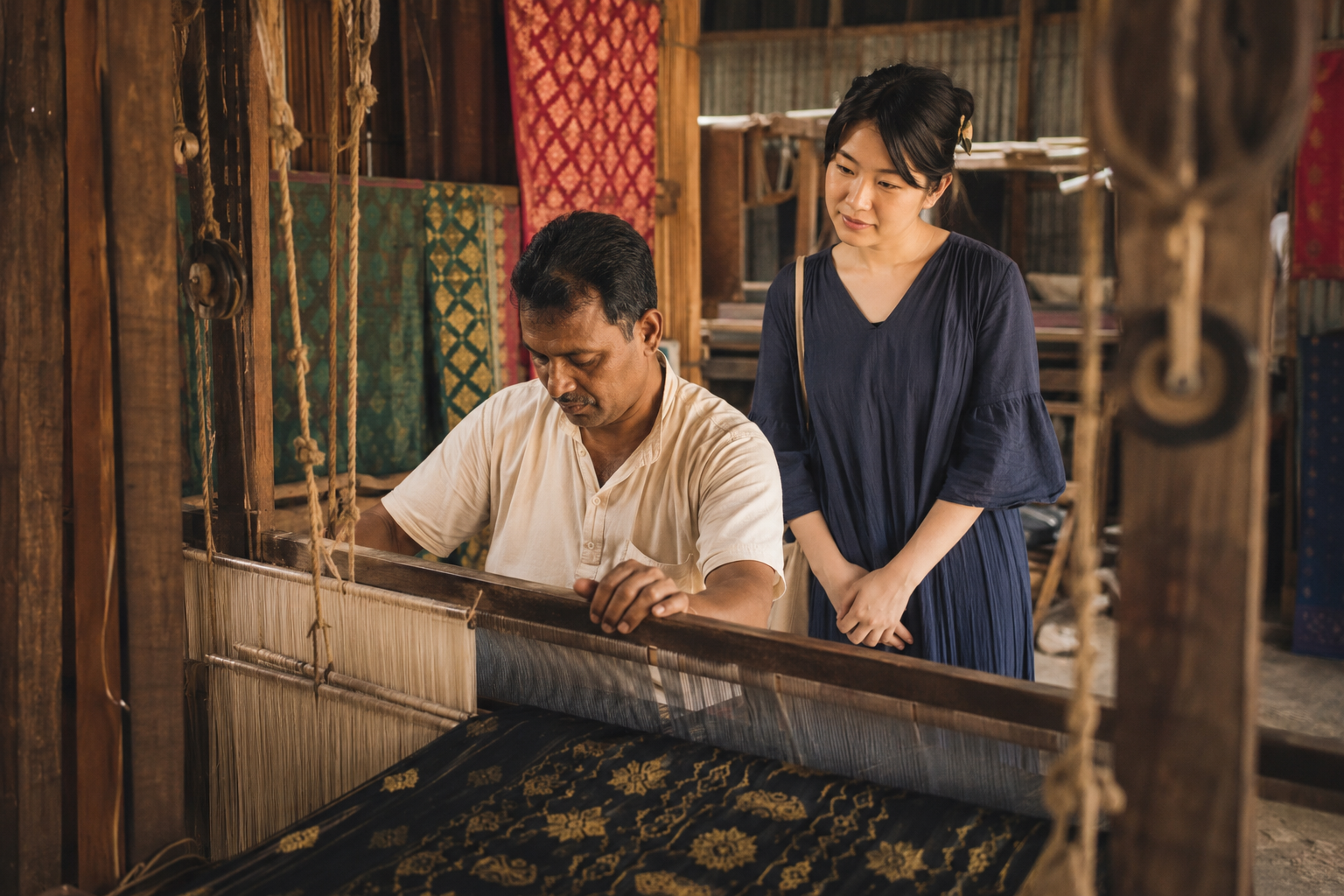
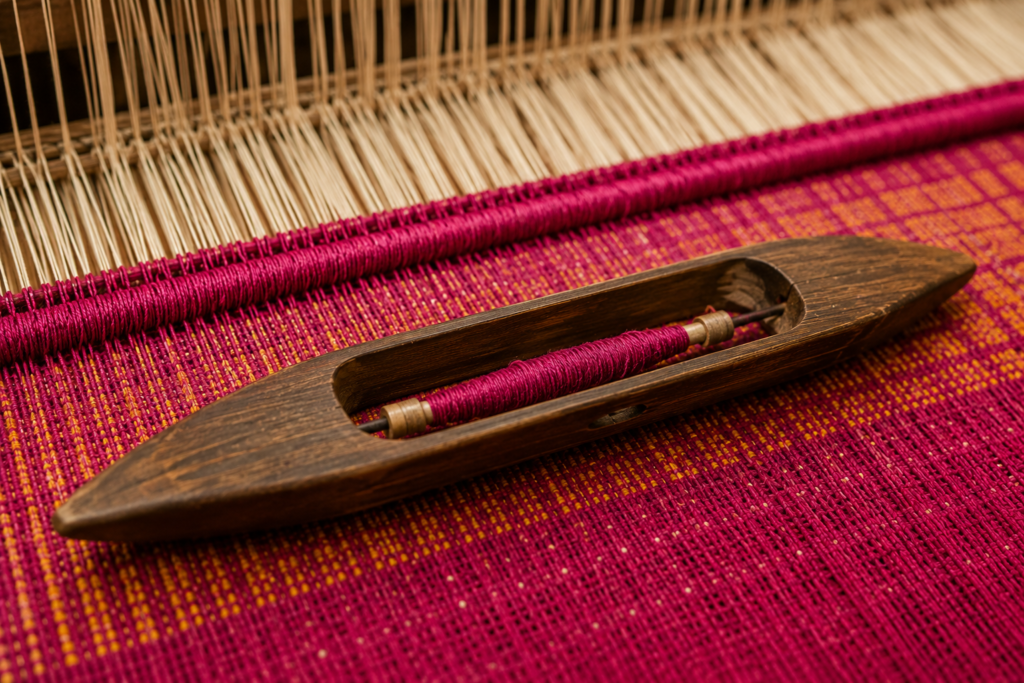
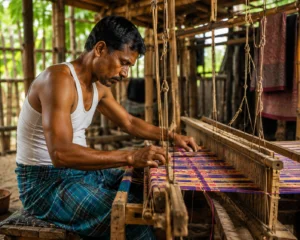
The Loom and the Artisans Photo: A Tangail weaver working at a traditional loom. In a rural Tangail saree workshop, the air is alive with the steady clatter of shuttles. Skilled artisans guide each handloom shuttle through a maze of warp and weft, coaxing silk and cotton threads into the classic Tangail weave.
The process is famously patient: it can take two weavers working together up to three months to finish a single 3-meter tangail saree . With each pass of the shuttle, patterns emerge – sometimes geometric, sometimes botanical – all rooted in centuries-old village traditions. The result is a saree so fine and resilient that Bengal’s women have worn it from daily life to royal courts alike.
Inside these simple workshop huts, every step is a ritual. The yarn is dyed in natural colors, then wound onto bobbins. One family member sits at the loom weaving warp and weft, while another turns the wooden wheel to spin fresh thread. Surfaces are sometimes starched with rice paste to keep edges crisp, and a weaver’s keen eye ensures motifs align perfectly. The UNESCO heritage report notes that families teach children this craft from a young age, learning through hands-on guidance. Visiting a Tangail Saree loom in action is like stepping into living history – seeing textile alchemy as ordinary fibers become ornate cloth under deft hands.
Village Vibes: Visiting Tangail’s Weavers
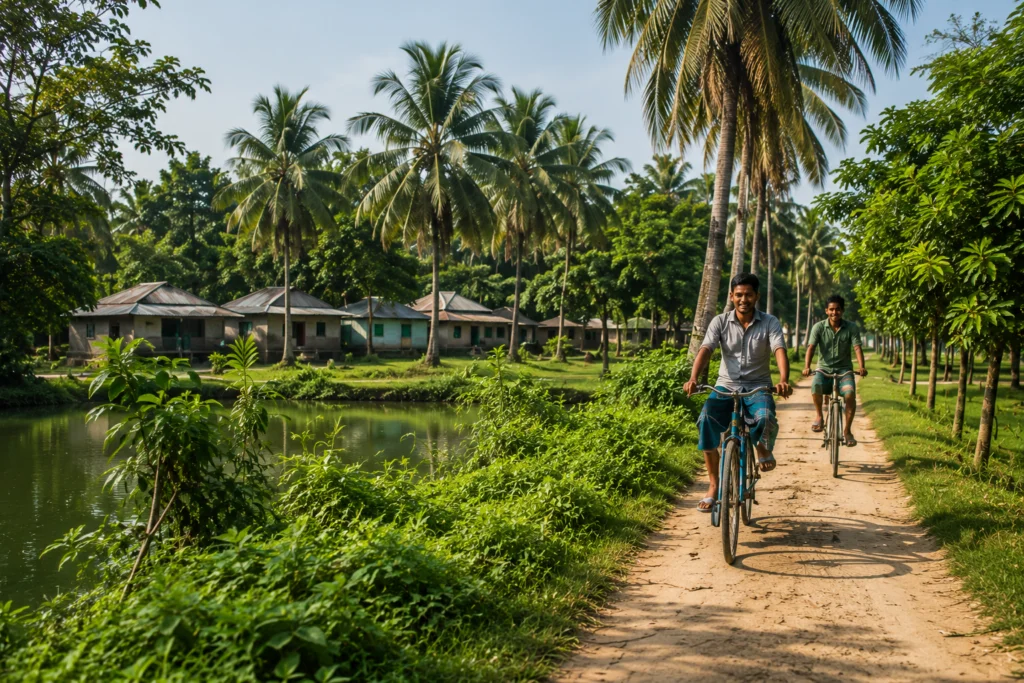
In such a village you might join an early-morning riham (cylindrical handloom) session or glimpse children running threads to the loom. The atmosphere is warm and authentic: casual chatter, the click of looms, and the scent of fresh paddy in the air. Many guided tours explicitly include an overnight stay in a Tangail weaving village. For example, itineraries often suggest a bicycle ride through a riverside settlement where the famous Tangail saree is woven .
Along the way visitors meet spirited hosts – perhaps an elderly weaver showing a warp tension trick, or a young weaver’s daughter practicing border motifs – and observe everyday life. Some packages also combine the visit with an organic farm tour, as several communities cultivate vegetables and rice alongside their loom. In fact, a community-run seed bank and puffed-rice mill (pitha) in a Tangail village offers an organic lunch to travelers. In the evening, folk songs or local dance might be arranged by the villagers.
Such immersive experiences – eating rice with the family, sleeping in a local guesthouse – make Tangail more than a stop on a map: it becomes a shared human story. Visitors also often combine Tangail with nearby historical sites. Just outside the weaving towns lies Atia Mosque (dating from 1502 AD) with its ornate terracotta façade – a stunning example of medieval Bengal architecture.
The ancient capital of Sonargaon (a 13th- century settlement) is an easy excursion from Tangail, offering colonial mansions and temples to complement the textile visit. In short, Tangail saree weavers offer both visual spectacle and rich context: tourists leave with vibrant memories, stacks of handcrafted sarees, and a deeper understanding of rural Bangladeshi life.
Weaving and Sustainability: Community Tourism
This model aligns with sustainable travel principles. Many Tangail tours are organized by local cooperatives or NGOs (for example, a well-known crafts NGO runs a village guesthouse and training center there). Such programs reinvest tourism income into the village – funding schooling for weavers’ children or community grain banks.
Additionally, visiting Tangail is an encouragement for younger generations to keep the craft alive. Like other endangered handloom arts, Tangail weaving once faced youth migration and machine Competition. But international interest (sparked by UNESCO recognition) is renewing pride in the craft. Each tourist who learns the loom’s rhythm and buys a handwoven fabric becomes an ambassador for sustainable culture. In essence, Tangail visits create a virtuous circle: outsiders gain authentic experiences and souvenirs, while communities gain economic support and cultural validation.
Tours often explicitly highlight the interplay of handloom and farming – for instance, visiting the UBNIG organic seed bank or local paddy fields alongside the looms . These excursions underline that Tangail’s heritage is not a static museum piece, but a living partnership between people and their environment. Travelers leave knowing they helped preserve a tradition – one stitch at a time.
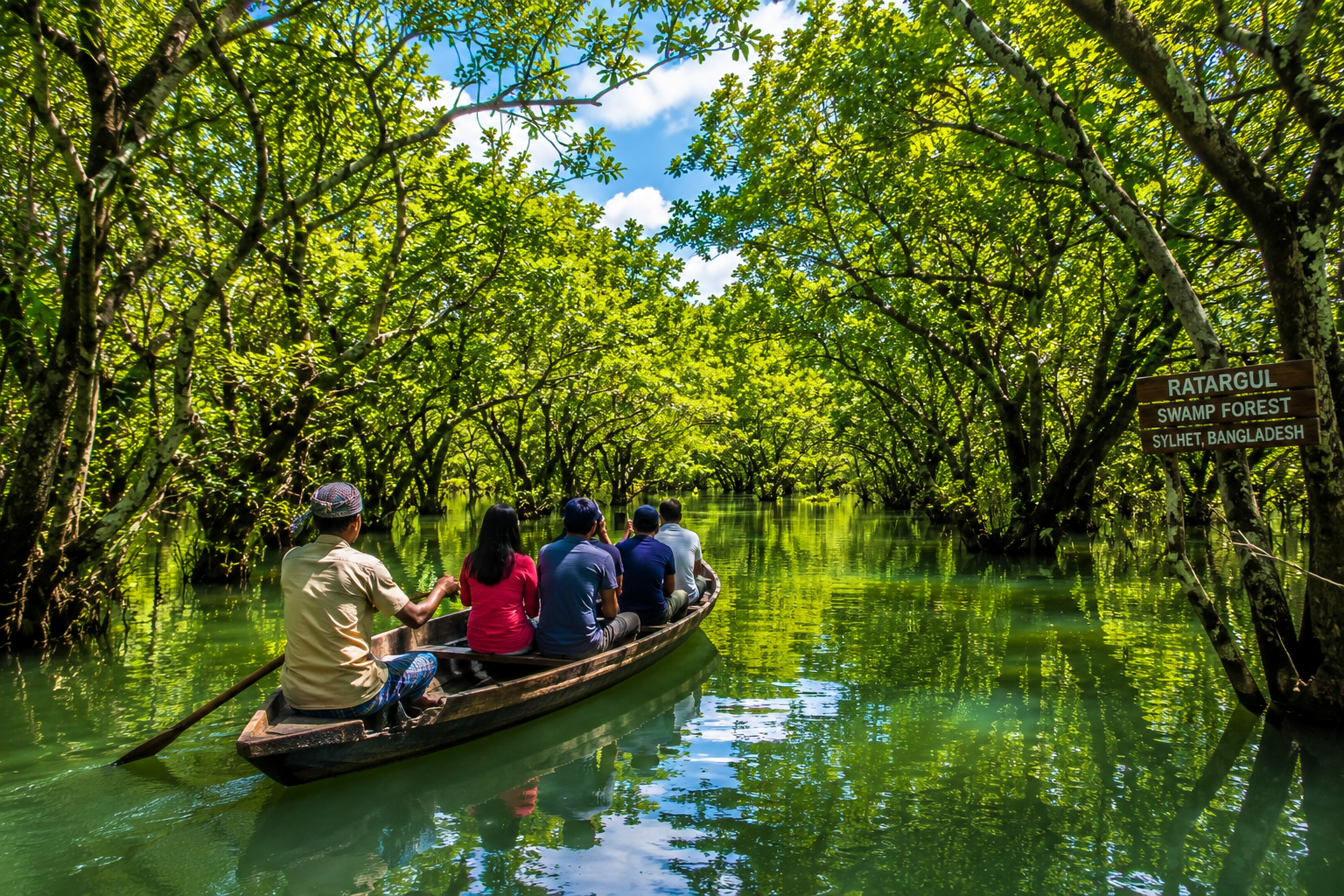
A Tangail Itinerary: How to Experience the Weave
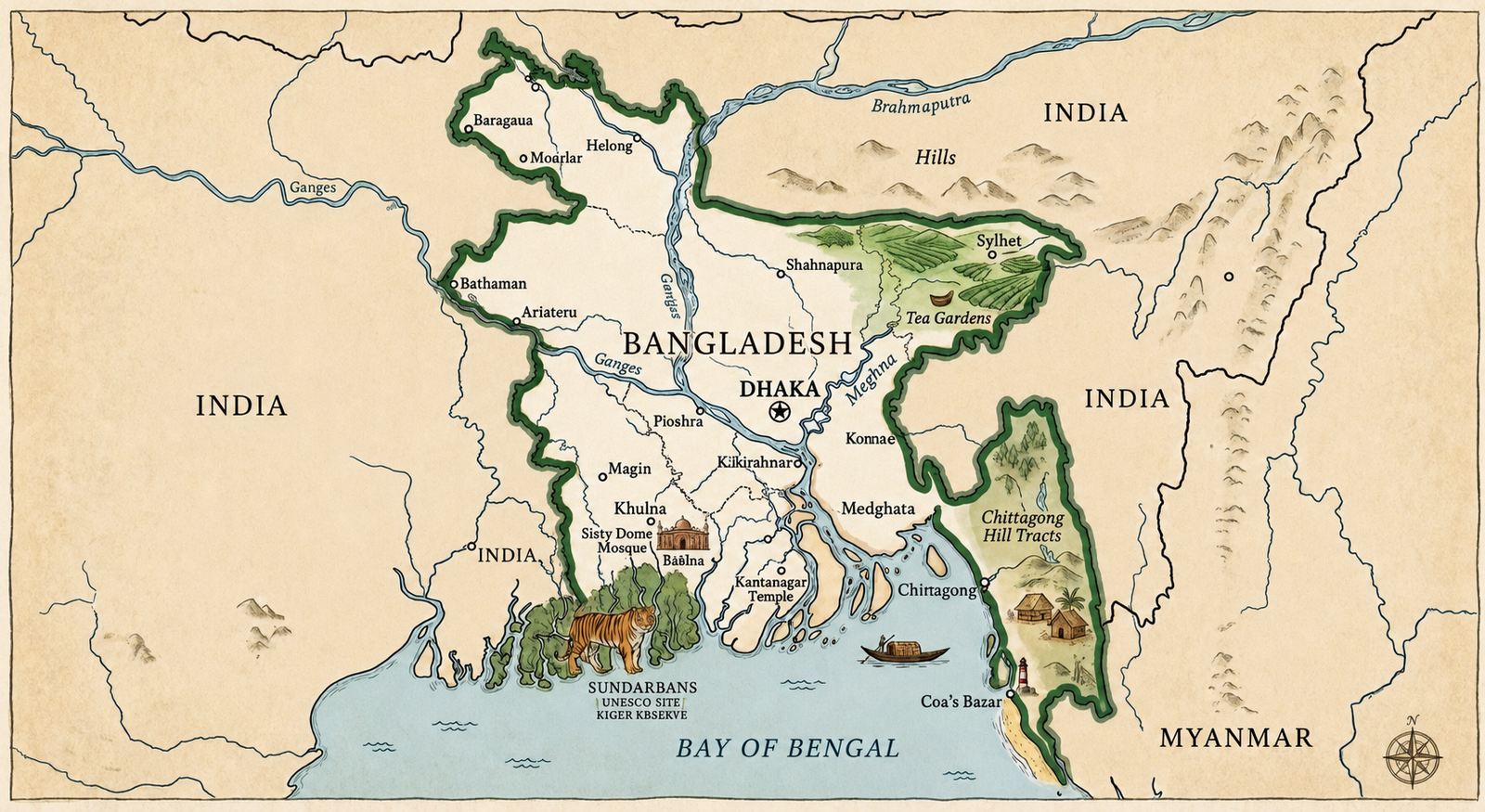
Tangail is only about 100 km northwest of Dhaka (roughly a 2–3 hour drive), making it easy to fit into any Bangladesh tour. The best visiting season is October through March, when the weather is cool and drytoursntripsbd.com. Here are some tips for planning a Tangail stop:
Weaving Workshop Visit: Begin with a demonstration at a handloom. Many villages welcome small groups to watch weavers at work. (Tip: bring a camera – the colorful threads and moving looms are incredibly photogenic.)
Village Bike Ride: Rent a bicycle and ride through the rice fields to the weaving clusters. Along the lanes you’ll see weavers’ huts and can stop for impromptu chats. This leisurely pace reveals village life up close.
Cultural Side Trips: Combine Tangail with nearby sights. Sonargaon, once Bengal’s 13th-century capital, lies en route to Tangail and adds historic context. In Tangail town itself, visit the 1502 AD Atia Mosque to admire its intricate terracotta reliefs.
Homestay and Meals: Book a homestay or community guesthouse in a weaving village. Such stays often include simple village fare (rice, dal, vegetables) and a chance to chat with the family. You might even help pound rice for puffed rice or grind spices for lunch – everyday village tasks that broaden your perspective.
Shopping Ethically: Be sure to buy a Tangail saree or scarf from the weavers directly or a trusted craft shop. Genuine handloom sarees are rich in texture and story, far more special than machine-made knockoffs. Your purchase is a reward for the artisan’s skill and a boost to the community.
Extend Your Tour: Tangail fits nicely into longer itineraries. For example, multi-day tours between Dhaka and the northwestern city of Rajshahi often include a night in Tangail villages with organic farming demonstrations.
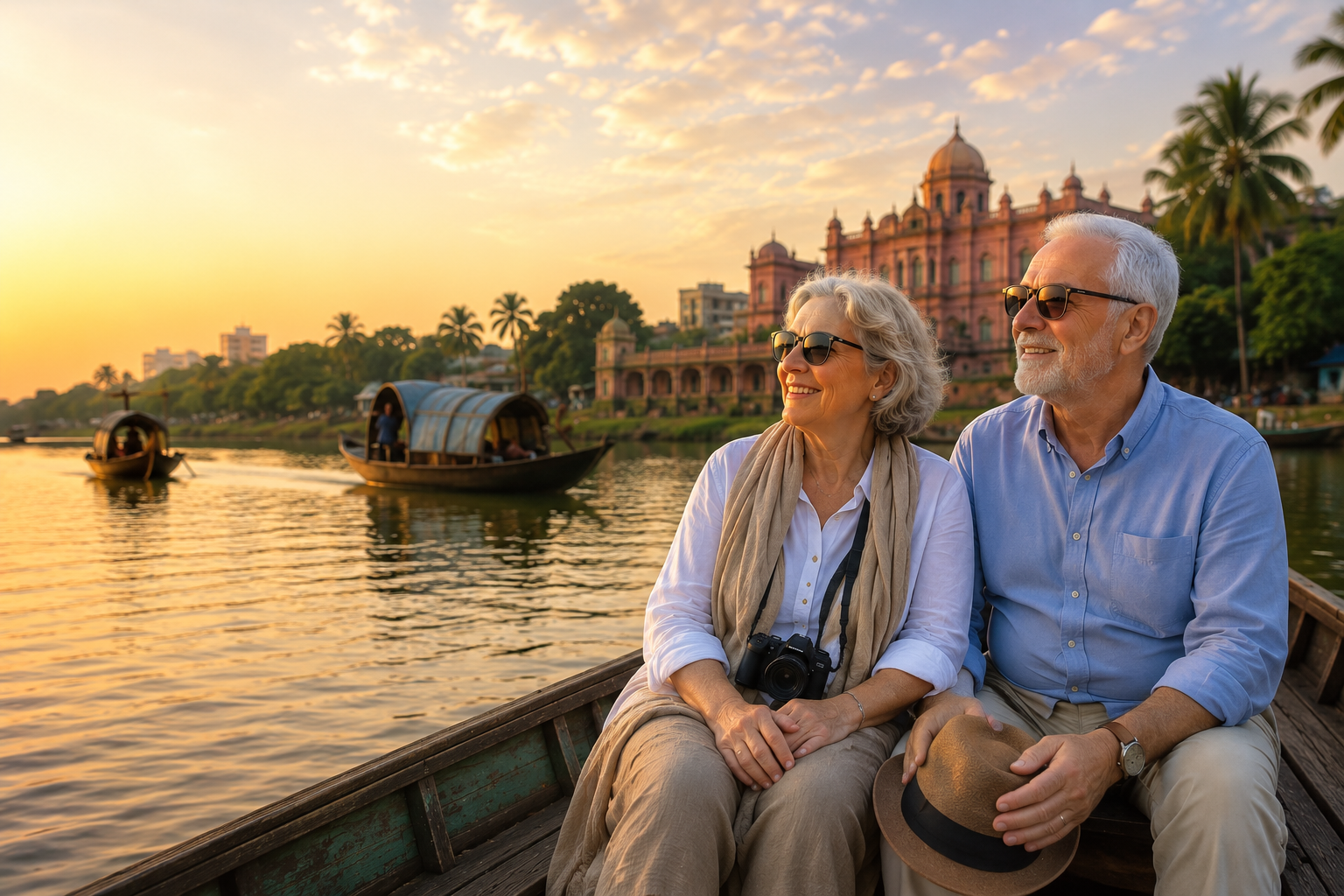
Photography-focused tours also prize Tangail’s vivid colors and rural charm, often scheduling early-morning shoots in the fields and looms. By blending these activities, a Tangail detour becomes unforgettable – rich with color, texture, and the warmth of local hospitality. The clacking looms and vibrant sarees turn a simple trip into a tapestry of experiences, giving travelers and travel agents fresh material to share and remember
Courtesy: Stourism
Website: www.stourismbd.com
mailto:info@stourismbd.com