Ratargul Swamp Forest
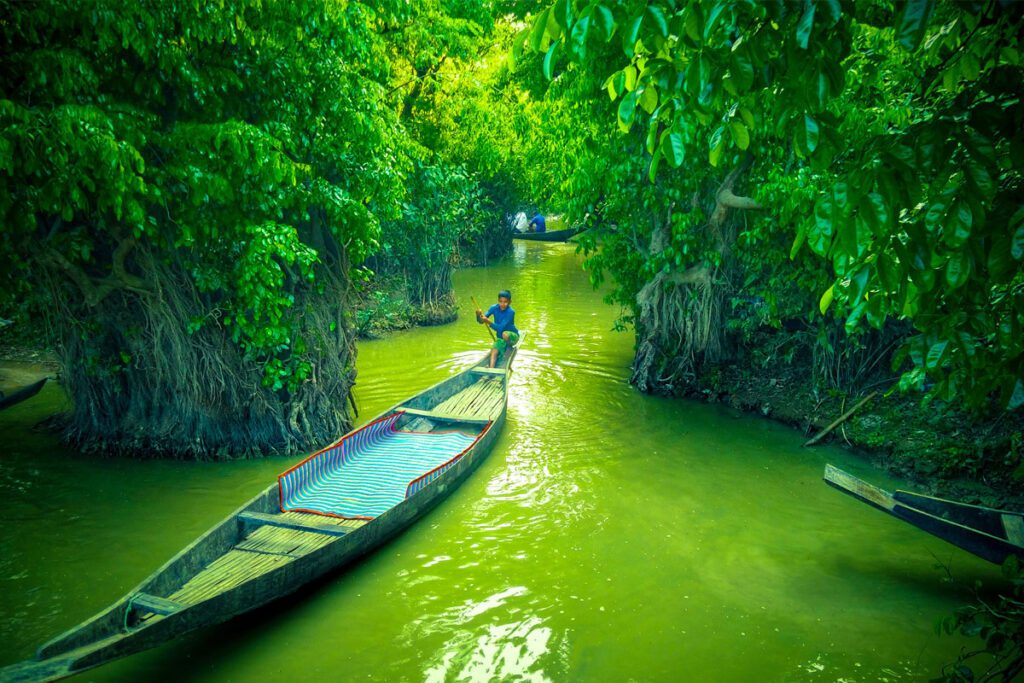
Nestled just outside Sylhet city, Ratargul Swamp Forest is emerging as a must-see eco-tourism destination. It is a freshwater swamp forest – the only one in Bangladesh and one of only a few of its kind worldwide. This unique ecosystem spans roughly 3,300 acres (504 acres protected) of lowland forest. In the monsoon season (June–October) the entire forest submerges under 10–15 m of clear water, leaving only treetops and aerial roots peeking above the surface.
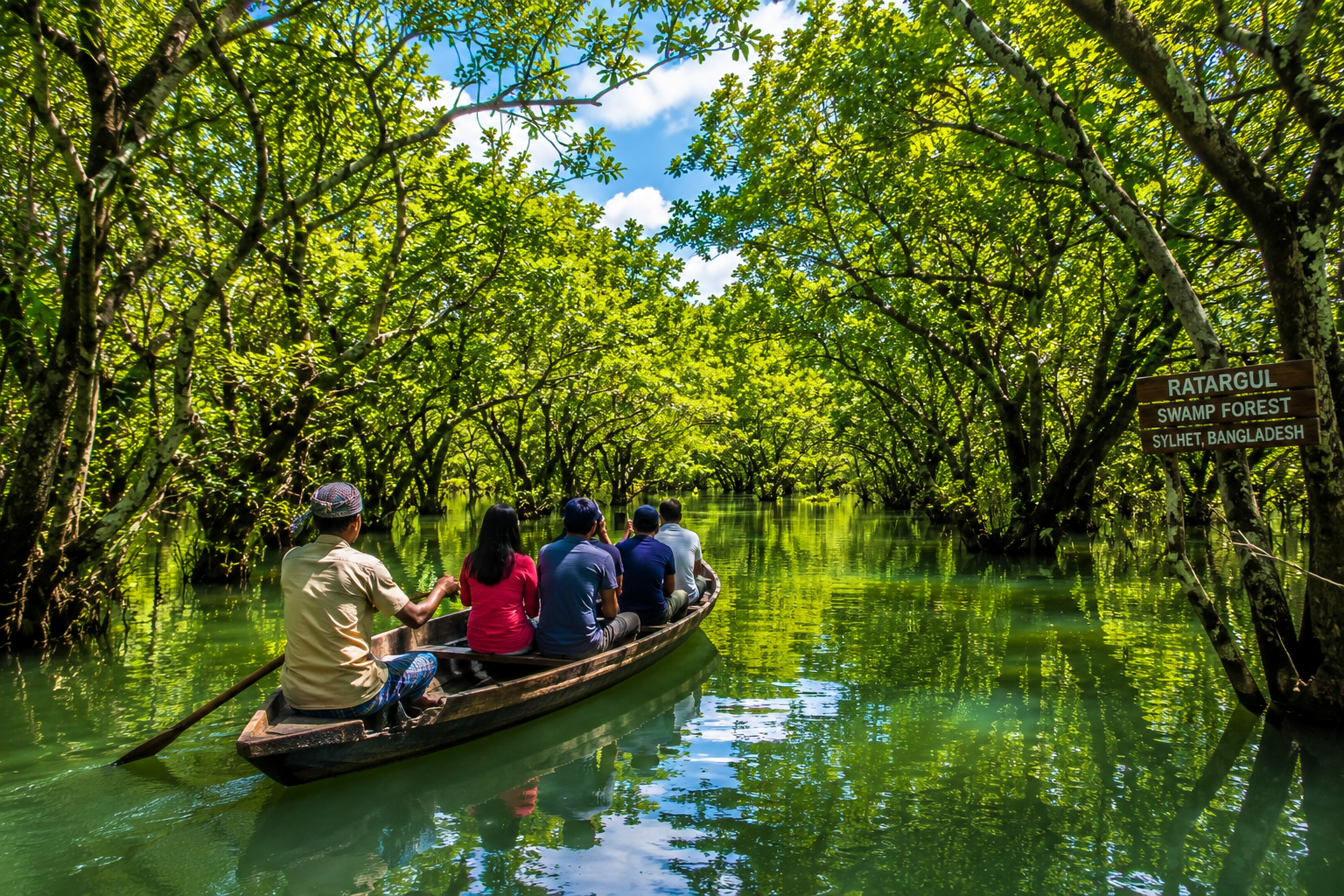
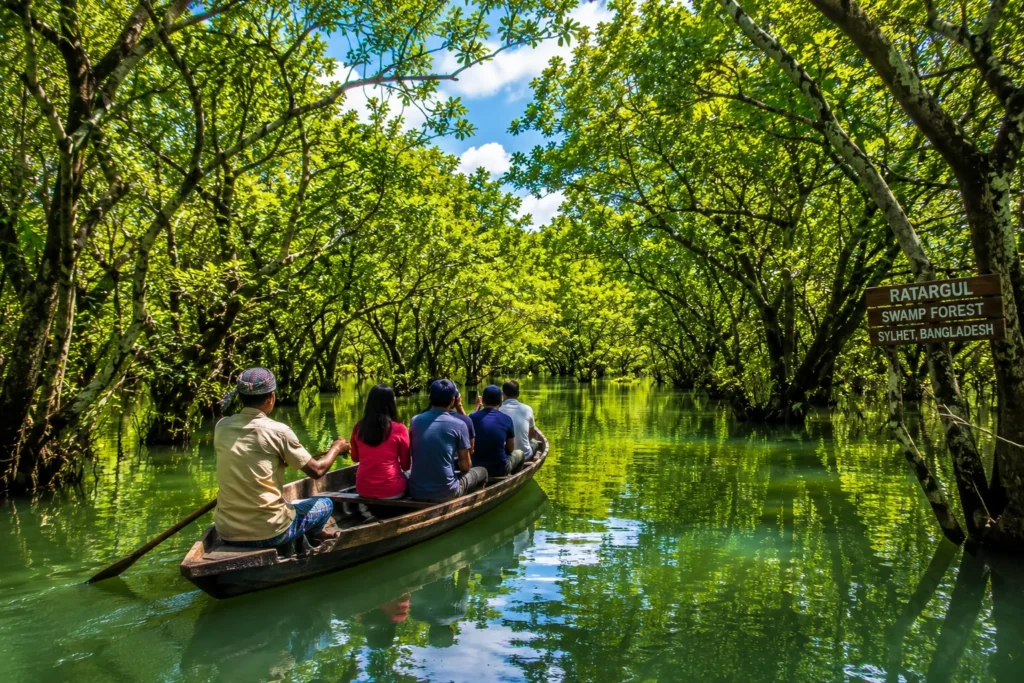
Gliding through this watery green world by boat has been likened to “stepping into a dream,” with sunlight filtering through the canopy and reflecting off the calm river. This serene, Amazon-like panorama provides a powerful contrast to Bangladesh’s busier tourist spots, making Ratargul a peaceful escape for visitors seeking nature and quiet scenery.
Ratargul’s Unique Ecosystem and Wildlife Ratargul’s flooded forest is home to rich biodiversity.
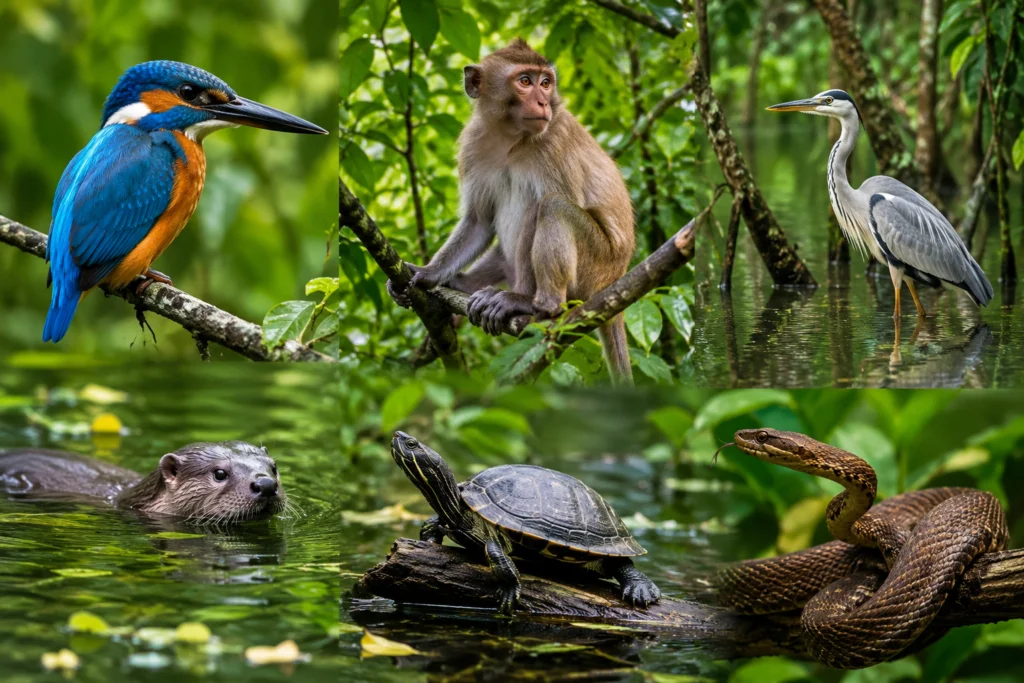
Over 70 plant species thrive here – including the zig-zag koroch and the two-level rooting hijal – and more than 200 animal species have been recorded. The forest’s calm waters and shoreline mangroves attract monkeys, otters, turtles, snakes and frogs, but it is perhaps its birdlife that stands out. Ornithologists and bird- watchers count over 70 bird species in Ratargul, from kingfishers and herons to the red junglefowl and white-crested laughingthrush.
This makes Ratargul a magnet for wildlife photographers and eco-tourists. A local guide puts it simply: Ratargul is a photographer’s dream – with misty mornings, mirrored reflections and endless greenery, “every shot… feels like a masterpiece.” Touring Ratargul by boat is the only way to truly experience its submerged canals. Visitors hire small wooden boats that glide silently through the flooded lanes of the forest. The boats are typically piloted by knowledgeable local majhis (boatmen) who serve as informal guides, pointing out hidden wildlife and unique plants. Nature-focused tour operators can highlight these
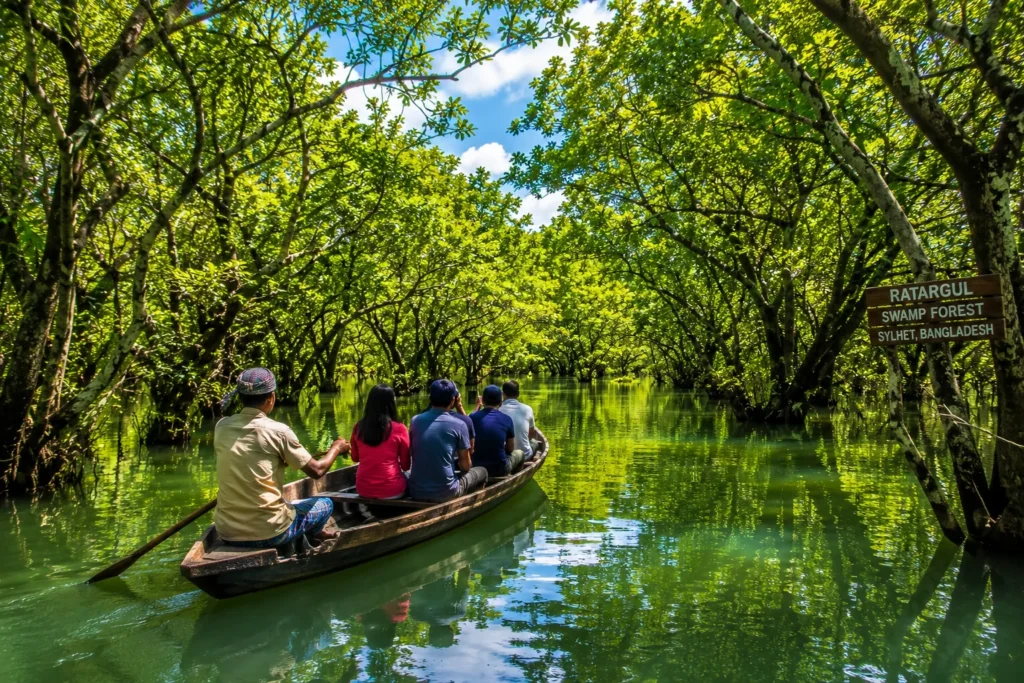
serene boat rides as a signature experience:
drifting under towering green arches is a major drawfor photographers, birders and “quiet adventure” travelers. For those selling sustainable tourism, Ratargul checks all the boxes: it is a protected, government-managed wetland with an emphasis on conservation (efforts are underway to promote its ecotourism potential). Monsoon Magic: Seasonal Splendor
During the monsoon months (roughly July through October), Ratargul is at its most spectacular. Heavy rains and overflow from India’s Jaintia Hills flood the Gowain River, raising water levels by 20–30 feet. The forest becomes a continuous underwater panorama of green, with only treetops and roots visible above the surface. This seasonal transformation has even earned Ratargul nicknames like the “Amazon of Bangladesh.” In fact, travelers often describe the experience as almost otherworldly: one visitor wrote that the flooded forest “feels like stepping into a different world…pure tranquility”. Monsoon also brings vibrant scenery – dappled sunlight, drifting mist and vivid reflections – that wedding photographers and adventure tourists find irresistible. (Tip for operators: the best light is in the early morning before any boat traffic.)
In the drier season (November to May), water levels recede and parts of the forest emerge. Even then, a limited boat ride is possible on the remaining channels, and the exposed forest floor (rich in clay) offers an entirely different view of this ecosystem. Either way, Ratargul’s seasonal cycle makes it an intriguing flexible attraction. In July–October the forest is fully submerged (a spectacle in itself), while the rest of the year it is accessible via short trails or partial canoe rides. This means tour operators can plan multi-day Sylhet packages that include Ratargul in the wet or dry season, expanding the options for eco- or nature-based add-ons on any itinerary. A Tranquil Offbeat Experience Unlike crowded national parks or cultural circuits, Ratargul offers a genuine sense of calm. It lies in a quiet corner of the Sylhet district (Gowainghat Upazila) and sees relatively few tourists.
As one local tourism guide notes, visiting Ratargul is “a place where you can get away from the chaos of the city”. For travelers craving a contemplative or wellness-focused experience, this peaceful ambiance is a selling point. The silence of the forest, punctuated only by bird calls and flowing water, provides a counterpoint to the busy pilgrimage sites or cities in Bangladesh. Agents and DMCs looking to market offbeat or eco-conscious travel will appreciate this contrast: Ratargul can be packaged as a tranquil jewel that underscores Bangladesh’s natural beauty, not just its history. Easy Access from Sylhet City Ratargul’s remote feel belies its accessibility. The swamp is only about 26 km from Sylhet’s city center. Sylhet itself is well-connected: daily domestic flights operate from Dhaka to Osmani International Airport, and long-distance trains and express buses (e.g. Parabat Express) also link Sylhet to Dhaka in 6–8 hours.
From Sylhet city, a quick drive (by hired car or CNG auto- rickshaw) takes travelers to the boat-launching point in Gowainghat. In practice, Ratargul can be offered as a half-day excursion or full-day tour from Sylhet. This proximity means international tour packages (even those on a tight schedule) can include Ratargul without major logistical strain. For example, a Sylhet nature circuit might combine Ratargul with nearby sites like tea garden walks, the Jaflong river stone quarries or Lawachara National Park, making the most of the region’s offerings.
Why Tour Operators Should Add Ratargul
For inbound travel agencies, Ratargul Swamp Forest is a fresh angle to differentiate Sylhet tours. Key selling points for agents include
Unique Attraction: Bangladesh’s only freshwater swamp forest and a globally rare ecosystem. No other tour in Bangladesh can boast this feature.
Wildlife & Birdwatching: Over 73 bird species and many native animals make it a draw for nature lovers.
Photographic Appeal: Dreamlike flooded landscapes and canal-boat scenes create compelling marketing images.
Off-season Option: Fully flooded in monsoon (July–Oct) for high drama, yet still visitable in winter with a different character.
Day-trip Friendly: Only ~1 hour from Sylhet city, allowing easy integration into travel Schedules.
Eco-Friendly Focus: Meets growing demand for sustainable travel experiences and can be pitched as a community-based, conservation-minded excursion.
International travel agents and tour operators can leverage Ratargul’s storytelling power: emphasize its environmental importance, support of local livelihoods, and untouched beauty. As one satisfied visitor puts it, if you love “nature, photography, or quiet adventures,” Ratargul“should definitely be on your travel list”
Courtesy: Stourism
Website: www.stourismbd.com
mailto:info@stourismbd.com